
Potty Training an Autistic Child: A Step-by-Step Plan for Home
Your child is four, five or even older and still in diapers. Friends offer tips that worked for their kids, and none of them work for yours. You are not doing it wrong. Potty training an autistic child usually takes a different plan, more time and the same routine from every adult in the house.
This guide gives you that plan. It covers when to start, how to rule out medical problems, and how to build a sitting schedule your child can follow. The guide also shows how to put the whole routine on one page, so grandparents, sitters and home care aides all do it the same way.
When Is an Autistic Child Ready for Potty Training?
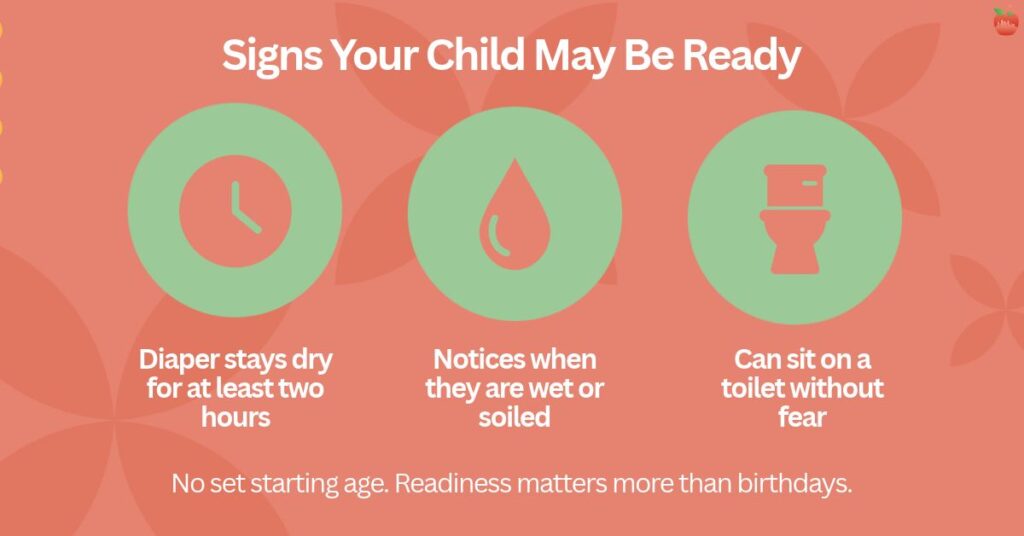
An autistic child may be ready for potty training when their diaper stays dry for at least two hours, they notice when they are wet or soiled, and they can sit on a toilet without fear. Interest in the toilet is not required for scheduled training. There is no set starting age, so readiness matters more than birthdays.
The American Academy of Pediatrics does not set an age for starting toilet training. It advises basing the timing on a child’s physical and psychological maturity.3 For autistic children, that often means starting later than siblings or cousins did.
Some signs of awareness are easy to miss. Your child may hide to have a bowel movement or pull at a wet diaper.2 Those small moments tell you their body is sending signals. If your child is afraid of the bathroom, work on that fear first, before any training begins.2
Should You Check for Constipation First?
Yes. Talk with your child’s pediatrician before you start. Constipation is a common medical barrier to potty training, and your pediatrician can treat it before training starts.2 A child who feels pain when passing stool will hold it in, and holding it in makes the problem worse.
Autistic children may be more likely to hold urine and stool. Anxiety, a need for sameness and sensory preferences can all play a part.3 The good news is that treating constipation often helps toilet training move forward.
Related Study: A 2021 report in BMJ Case Reports described bladder and bowel problems as common but often missed in autistic children. Research reviewed by the authors linked treating constipation to an 89% drop in daytime wetting.3
Ask the doctor about fluids and fiber, too. More water and fiber can help your child feel the urge to go.1 If your child cannot pass urine at all, or seems in severe pain, get urgent medical care.
How Do You Start Potty Training an Autistic Child?
To start potty training an autistic child, track their wet and dirty diapers for three typical days. Use that log to set regular toilet sits, about six a day, tied to routines like meals. Start with very short sits. Switch to underwear during the day, and reward your child right after they go in the toilet.
Many families do best with schedule training, sometimes called trip training.1 You set the times, and your child’s body learns to follow them. Your child does not need to ask or show interest first.2
Step 1: Keep a Three-Day Log
Write down when your child drinks, wets and has bowel movements over three ordinary days. Check the diaper often, even every 15 minutes, to catch the timing.1 Patterns usually appear quickly. The log shows how long after a drink your child tends to wet.1
Step 2: Set a Sitting Schedule
Aim for about six toilet sits a day.1 Link each one to something that already happens, such as waking up, after meals and before a bath. Start with sits as short as five seconds. Over time, stretch them toward ten minutes, and use a timer so your child knows when the sit is over.1
Add one longer sit each day for bowel movements.1 The Autism Treatment Network’s sample plan schedules sits about 15 minutes after meals and drinks.1 Tell your child it is time to go rather than asking if they need to. Questions invite a “no.”
Step 3: Switch to Underwear During the Day
Underwear lets your child feel when they are wet. That feeling is part of the learning.1 A pull-up over the underwear can save your floors. Diapers or pull-ups are still fine at night and on long trips out.1 Keep plenty of spare underwear on hand, because you will need it.
Step 4: Reward Right Away
Give a reward the moment your child pees or poops in the toilet. Quick rewards work better than delayed ones.1 A small snack, a sticker or a short favorite song all work. Save that reward for the toilet only, and check every few months that your child still wants it.1
What Words and Pictures Should You Use?
Pick one simple word for peeing and one for going to the bathroom. Use those exact words every time.1 If your child uses signs or a picture board, use the same sign or picture on every trip.
A visual schedule of the bathroom routine helps, too. Take photos of each step: pants down, sit, pee, wipe, flush, pants up, wash hands. Line them up in order, and point to each one as your child finishes the last.1 End the schedule with something your child enjoys. For a child who does not understand pictures yet, real objects work, like a roll of toilet paper.1
How Can You Make the Bathroom Less Overwhelming?
To make the bathroom less overwhelming, find the sounds, smells, lights and textures that bother your child and change what you can. Try a quieter fan, softer toilet paper or dimmer light. Use a small potty seat and a footstool so your child feels steady. Let them flush without pressure, or offer noise-blocking headphones.
Sensory triggers can turn the bathroom into the hardest room in the home.2 A loud flush, a strong cleaner smell or a cold seat may be enough to cause a meltdown. Decide whether the door should stay open or closed.1 Soft pants with an elastic waist also make the whole process easier.2
City apartments often have one small bathroom shared by the whole family. Keep a basket with your child’s seat, footstool and picture cards right by the toilet, so setup takes seconds. If an exhaust fan is noisy, see whether your child does better with it off during sits.
What Should You Do After an Accident?
Accidents are part of learning. Stay calm and keep your words simple. Change your child as soon as they are wet or soiled, and do it in or near the bathroom.1 When possible, have your child put waste in the toilet, flush and wash hands.1 This links the mess to the right place without making it a punishment.
Never scold or punish your child for an accident. Experts recommend praise and rewards for success, without punishment.3 Calm, matter-of-fact words work best.1
How Do You Keep Every Caregiver on the Same Plan?
To keep every caregiver on the same plan, write the toileting routine on one page. List the schedule, the exact words you use, the visual steps, the rewards and what to do after an accident. Share it with grandparents, sitters, teachers and home care aides. Ask everyone to follow it the same way every day.
The Autism Treatment Network puts it simply: keep language simple and keep toileting routines the same.1 A child who hears “potty” from one adult and “restroom” from another may not connect the two. Use the same words and methods your child’s teachers use, too.1
What to Put on Your One-Page Toileting Plan
- Goal: what you want your child to do in the next few weeks.
- Schedule: when and how long each sit lasts, such as after meals and drinks.
- Words: the exact words, signs or pictures for each step.
- Setup: lighting, fan, door open or closed, and who goes in with your child.
- Tools: visual schedule, timer, books or music.
- Rewards: what earns a reward and what happens if no reward is earned.
- Accidents: how to clean up calmly.
Tape the plan inside a cabinet door near the bathroom. Update it when something changes, and tell every caregiver about the update.
How Do You Practice Outside the Home?
Once your child uses the toilet at home, practice in other bathrooms. Try a relative’s home, school and stores you visit often.1 Each new bathroom looks, sounds and smells different. Bring the same picture cards and rewards so the routine feels familiar.
If your child succeeds at school but not at home, break the home routine into smaller pieces. Start with simply walking into the bathroom, then add one step at a time.1
When Should You Ask for Professional Help?
Keep the same goal for about three weeks before you judge progress.1 Expect the whole process to take months, not days. It is fine to pause during a stressful stretch and restart later.1
Talk with your child’s doctor if training has not worked by around three and a half years of age, or if holding stool is causing constipation.3 If your child is still in diapers after steady family effort, ask about a specialist.1 A behavior analyst, occupational therapist or speech-language pathologist can help with the parts that are hardest for your child.2
How Does City Choice Home Care Support Families?
City Choice Home Care has been a licensed New York home care provider since 2005. Our pediatric aides help children with toileting, incontinence care, bathing, dressing and meals at home. They follow the routines and words your family already uses, including your one-page toileting plan.
Every caregiver is background-checked, bonded, insured and trained through a program approved by the New York State Department of Health. We hire only about 1 in 25 applicants. When we match an aide with your family, we consider your child’s needs, language, culture and household logistics.
City Choice Home Care is also an OPWDD-approved provider. Families whose child already receives OPWDD services can add home care alongside them. There are no long-term contracts, and you are never locked in.
We serve families across Manhattan, Brooklyn, Queens, The Bronx, Staten Island and Westchester, with a 24/7 intake line. Contact us to talk about the support your child needs.
Related Guides
- Pediatric Home Care in New York City
- Pediatric Care Services
- Home Care in New York: A Complete Guide
- Service Areas
- Why City Choice
Sources
- Autism Speaks Autism Treatment Network, Autism Intervention Research Network on Physical Health. Toilet training: a parent’s guide. 2012. Accessed November 10, 2026. https://hollandbloorview.ca/sites/default/files/2020-11/ASD-Engage-ATNToiletTrainingGuide.pdf
- Ellzey A, Samson-Fang L. Toilet training children with complex medical conditions. Medical Home Portal. Accessed November 10, 2026. https://www.medicalhomeportal.org/clinical-practice/common-issues-for-cyshcn/toilet-training-for-cyshcn
- Raturi S, Li FX, Wong CM. Recognition and management of bladder bowel dysfunction in children with autism spectrum disorder. BMJ Case Rep. 2021;14(6):e242646. Accessed November 10, 2026. https://pmc.ncbi.nlm.nih.gov/articles/PMC8173284/