
Respite Care for Children: A Parent’s Guide to Getting a Real Break
You cannot remember the last time you sat through a full movie, slept past six or went to a doctor’s appointment alone. Raising a child with a disability or complex health needs is a full-time job with no days off. Respite care for children exists to change that, even for a few hours at a time.
This guide explains what respite is and the main types to choose from. It covers how families in New York can find and pay for it. You will also get a simple plan for handing your child over to someone new without spending the whole break worrying.
What Is Respite Care for Children?
Respite care for children is short-term care that gives parents a break from caring for a child with a disability or special health care needs. A trained caregiver can come to your home, or your child can attend a day program, camp or overnight stay. It can last a few hours or several days.
New York’s Office for People With Developmental Disabilities (OPWDD) describes respite as temporary relief from the demands of caregiving.1 Its purpose is to lower family stress, so parents can keep meeting their child’s needs.1 Respite can happen in the home or out of it, during the day, in the evening or overnight.1
Why Do Parents Need Respite?
Caring for a child with high needs is rewarding, but it is also exhausting. Without regular breaks, the strain can show up in your sleep, your health and your relationships.
A break is not selfish. It is maintenance. Parents who rest come back with more patience, more energy and a clearer head. Your child benefits from that, too. Many children also enjoy the change of scenery, new activities and time with someone new.
What Types of Respite Care Are There?
The main types of respite care for children are in-home respite, where a caregiver comes to your home, and out-of-home respite, such as day programs, after-school programs, camps or overnight stays at a host home or facility. Informal respite, like trading care with another family or training a trusted relative, also counts and costs little.
In-Home Respite
A caregiver comes to your home for a few hours daily, weekly or as needed.2 Your child stays in familiar surroundings with their own equipment, routines and bed. This is often the easiest place to start, especially for children who struggle with change.
Out-of-Home Respite
Out-of-home options include drop-off day programs at a school, health care facility or faith-based or volunteer agency.2 Others are daily or weekly programs run by community agencies, host families, residential facilities or sleepaway camps.2 These can give your child social time and new experiences.
Informal Respite
Some parents form “co-ops” and take turns watching each other’s children.2 Others train extended family members, friends or neighbors to care for their child.2 Informal respite is flexible and low cost, but it works best when the helper has clear instructions.
How Does Respite Work for Families With OPWDD Services?
If your child already receives OPWDD services, respite may be part of the supports available. OPWDD advises families to talk with their Care Manager to learn more about respite services.1
Related Source: An OPWDD administrative memo lists several categories of respite, including in-home, site-based, recreational, camp and intensive respite for people with high behavioral or medical needs. For school-age children, respite generally takes place outside regular school hours.3
Respite is generally meant as an occasional break, not ongoing daily coverage. Plan to use it for rest, appointments, time with your other children or a family emergency.
How Do You Pay for Respite Care?
Cost depends on the type of respite and how your child qualifies. KidsHealth, from Nemours Children’s Health, notes that Medicaid home and community-based waivers often cover respite for children with disabilities.2 Some states also have Lifespan Respite programs for children who do not qualify for a waiver.2
A hospital social worker or your child’s care team can help you sort out what your child may qualify for.2 Parent groups for your child’s condition are also good places to ask which programs other New York families use.2
If you work, New York State Paid Family Leave may also help. It offers eligible employees up to 12 weeks of job-protected, paid time off to care for a family member with a serious health condition, including a child of any age.4
How Do You Choose a Respite Caregiver?
To choose a respite caregiver, start with a phone interview and ask about background and reference checks. List your child’s needs, such as toileting, feeding and communication, and confirm the caregiver can handle each one. Meet in person and watch how they interact with your child. Call references, and keep looking until you feel comfortable.
These questions help during an interview:
- Have you had a background check, and can I call your references?
- Have you cared for a child with needs like my child’s before?
- How would you handle a meltdown, a refusal or a medical concern?
- Are you comfortable with toileting, feeding or lifting, if my child needs it?
- How will you tell me how the time went?
Trust your gut. KidsHealth recommends continuing to interview until you find someone you feel comfortable with.2
How Do You Prepare for the First Respite Visit?
To prepare for the first respite visit, write a one-page sheet about your child: routines, the words they use, foods, medicines, calming tricks, triggers and emergency contacts. Have the caregiver visit once while you are home. Start with a short break of an hour or two. Then lengthen breaks as your child and caregiver get comfortable.
The handoff sheet is your secret weapon. It means the caregiver does not have to guess, and your child hears the same words and routines they already know. Include these items:
- Daily routine and the order of each step.
- The exact words or signs your child uses for food, bathroom and help.
- What your child eats and drinks, and any allergies.
- Medicines, doses and times, if the caregiver will give them.
- What upsets your child and what calms them down.
- Your phone number, a backup contact and the pediatrician’s number.
Tell your child about the visit ahead of time, using pictures if that helps. A first-then card, such as “first sitter, then Mom,” can make the change easier to accept. Keep the first break short and close to home, so a quick return is possible if needed.
What Is the Difference Between Respite and Home Care?
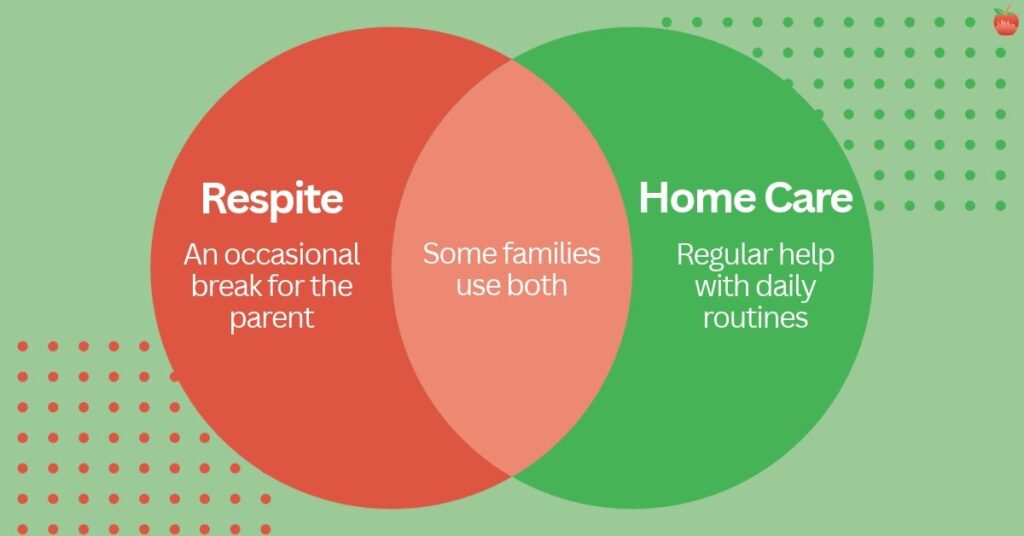
Respite is an occasional break for the parent. Home care is regular help with your child’s daily routines, such as bathing, dressing, toileting and meals. Some families use both. Respite covers a weekend away, while a home care aide helps every weekday after school.
If you find yourself needing a break every single day, that is a sign your family may need ongoing support, not only occasional respite.
How Does City Choice Home Care Support Families?
City Choice Home Care has been a licensed New York home care provider since 2005. Our pediatric aides help children with bathing, dressing, toileting, meals and daily routines at home. They follow the routines your family has built, including your handoff sheet.
Every caregiver is background-checked, bonded, insured and trained through a program approved by the New York State Department of Health. We hire only about 1 in 25 applicants. When we match an aide with your family, we consider your child’s needs, language, culture and household logistics.
City Choice Home Care is also an OPWDD-approved provider. Families whose child already receives OPWDD services can add home care alongside them. There are no long-term contracts, and you are never locked in.
We serve families across Manhattan, Brooklyn, Queens, The Bronx, Staten Island and Westchester, with a 24/7 intake line. Contact us to talk about the support your family needs.
Related Guides
- Pediatric Home Care in New York City
- Pediatric Care Services
- Home Care in New York: A Complete Guide
- Service Areas
- Why City Choice
Sources
- New York State Office for People With Developmental Disabilities. Respite services. Accessed November 10, 2026. https://opwdd.ny.gov/types-services/respite-services
- Nemours KidsHealth. Respite care. Reviewed by Sewell-Roberts C. Accessed November 10, 2026. https://kidshealth.org/en/parents/respite-care.html
- New York State Office for People With Developmental Disabilities. ADM #2017-01R: Home and Community-Based Services (HCBS) waiver and non-waiver enrolled respite services. Revised March 1, 2021. Accessed November 10, 2026. https://opwdd.ny.gov/system/files/documents/2021/12/adm-2017-01r-respite-adm-update-3-1-21.pdf
- New York State Workers’ Compensation Board. Paid Family Leave: a guide for public employers. Accessed November 10, 2026. https://www.wcb.ny.gov/content/main/forms/PFLDocs/pfl-public-employers-20240305.pdf